

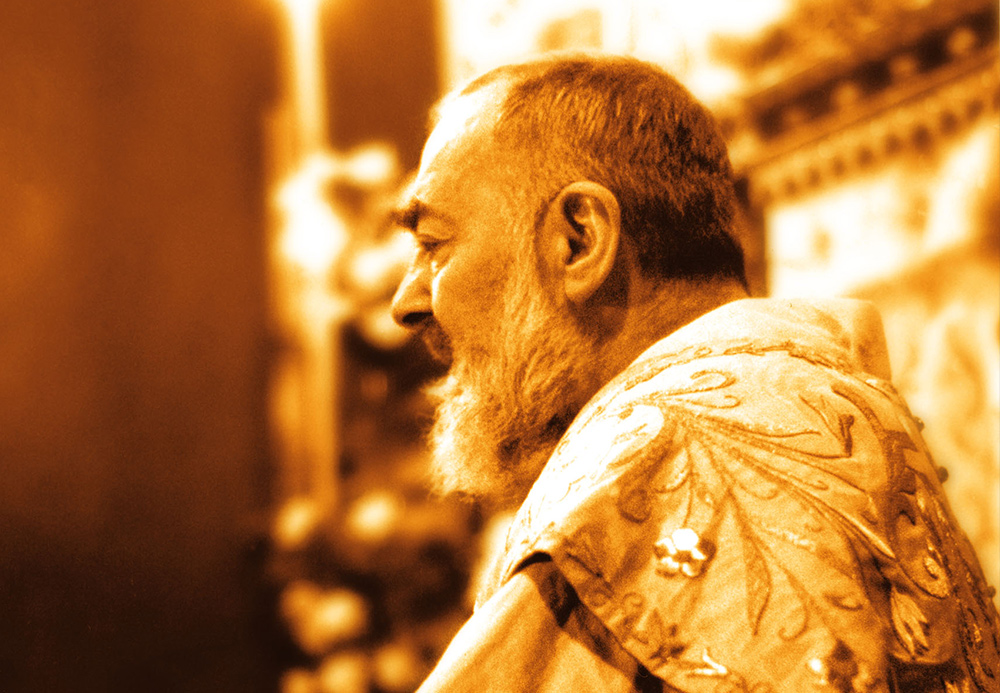
by bro Francesco Dileo, OFM Cap.
With the closing of the Holy Door of St Peter’s Basilica in the Vatican on 6 January, Leo XIV consigned to history the third Jubilee of this century and of the millennium, the second ordinary Jubilee after that of the year 2000, following the Extraordinary Jubilee of Mercy in 2016.
As we look ahead to the next Jubilee — also extraordinary — in 2033, which will mark the two-thousandth anniversary of the Redemption, we cannot confine the Holy Year that has just ended to the past, preserving in our memory only its most significant events, such as the succession of two Popes, or the canonisations of the two young saints Carlo Acutis and Pier Giorgio Frassati, followed by the equally significant canonisation of Bartolo Longo, an apostle of prayer and charity and a devoted admirer of our Padre Pio.
What remains — and must remain — of the Jubilee now concluded is the commitment to hope, which we must no longer regard as a mere ‘theme’, but as a virtue to be practised and shared, one of which contemporary humanity is in ever greater need. Perhaps not by chance, at the Jubilee audience of 6 December last, in the heart of Advent, the Holy Father invited Christians to take up the prophetic legacy that was recalled to us precisely on the solemnity of the Incarnation of God made man — a legacy that we must make fruitful in the time that lies ahead.
‘The birth of Jesus,’ Pope Prevost said, ‘reveals a God who draws people in: Mary, Joseph, the shepherds, Simeon, Anne, and later John the Baptist, the disciples, and all those who encounter the Lord are drawn in; they are called to participate. It is a great honour — and what a dizzying one! God involves us in his story, in his dreams. To hope, then, is to participate. The Jubilee motto, “Pilgrims of hope”, is not a slogan that will fade in a month’s time. It is a way of life: “pilgrims of hope” means people who walk and who wait — but not with folded hands — rather, by participating.’ He continued: ‘Amid the troubles and the beauty of the world, Jesus awaits us and involves us, asking us to work with him. That is why to hope is to participate!’
We must therefore keep alive in our hearts, and cultivate through our actions, this powerful sign of hope, which blossoms abundantly and enduringly from the shoot that springs from a felled trunk (cf. Is 11:1), as we are reminded each year during the rich season of Advent. God chooses precisely what appears small and weak in order to bring forth his newness. For only those who are clearly aware of their own smallness and weakness can recognise and welcome the greatness and omnipotence of the Lord. For this reason, St Francis chose to live in the condition of humility, later embraced by all who decided to follow him. In this way, that condition became — and continues to be — the ‘place’ where God delights in making what is new blossom, as he did in the life of our revered confrere Pio of Pietrelcina. St Francis did not hope because he felt strong, but because he considered himself small. He discovered that Christian hope is not founded on one’s own abilities or securities, but on radical trust in God who, by choosing to be born in the flesh, is present within our fragilities and poverty.
Christmas has reminded us that hope remains alive only if it stays rooted in waiting, and in the humble certainty that God is at work even when we do not see it; that he prepares and brings forth blossoms where we are able to observe only cut and lifeless trunks. Let us not forget this lesson. And then it will always be Christmas, and it will always be Jubilee, on every day the Lord grants us to live.