

by Bro Francesco Dileo, OFM Cap.
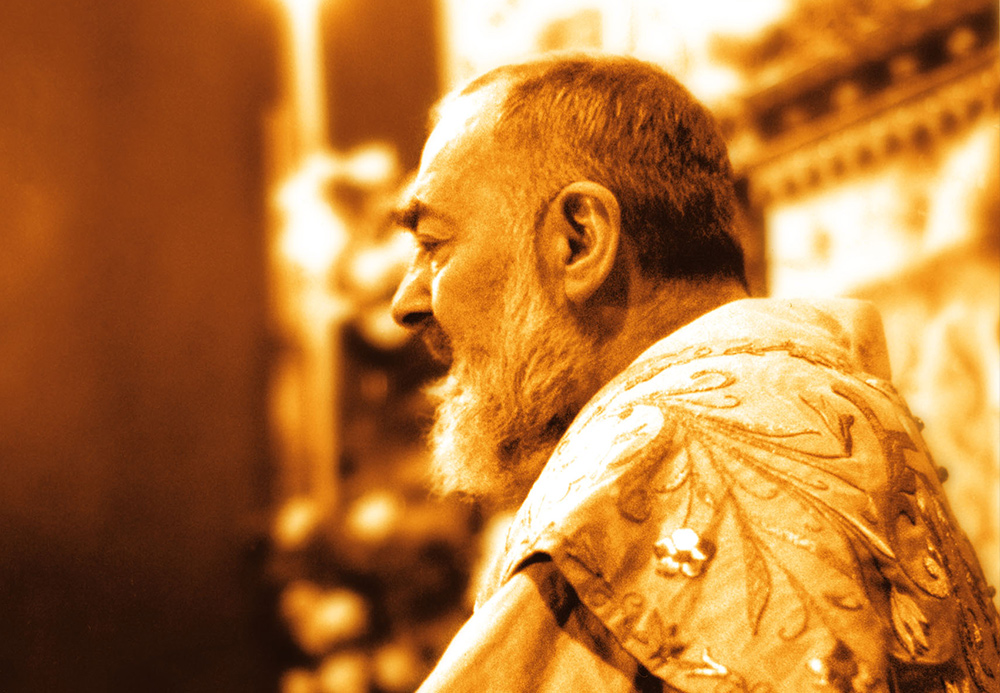
‘Padre Pio, a worthy son of Saint Francis.’ This was the theme chosen by the Fraternity of San Giovanni Rotondo for this year’s novena, vigil and liturgical feast in honour of Saint Pio of Pietrelcina. These celebrations come shortly before the commemorative events marking the eight hundredth anniversary of the Seraphic Father’s passage from this earth into Heaven, in Assisi. Within the great Franciscan and Capuchin family, there is certainly no shortage of examples of holy lives spent in the service of God, the Church and of others. Padre Pio himself lived ‘in the cloister and beneath the banner of the Poor Man of Assisi’, striving to be a less unworthy son of Saint Francis, also in order ‘to set an example to my confrères, so that fervour may always continue and increase ever more within me, making me a perfect Capuchin’ (Letters III, p. 1018). A resolve that bore evident fruit. On 22 May, Pope Leo XIV authorised the Dicastery for the Causes of Saints to promulgate the decree concerning the heroic virtues of one of his confrères, Bro Nazareno Zucca of Pula, whose story became intertwined with that of Padre Pio. His reputation for holiness strengthened by extraordinary events and miraculous healings attributed to his intercession, became particularly evident on the day of his funeral, which turned into a great and deeply felt public tribute. In our own religious Province, the processes for the recognition of the holiness of two lay brothers are also under way: Bro Daniele Natale of San Giovanni Rotondo and Bro Modestino Fucci of Pietrelcina. Both devoted themselves tirelessly to others, offering consolation, advice and encouragement, but above all a great deal of hope rooted in faith. Stories of supernatural experiences and graces received through their prayers have likewise spread in connection with Bro Daniele and Bro Modestino. Yet, more than anything else, what matters is the example to be drawn from these lives spent in the service of others. Their witness became a truly eloquent lesson: the lesson of the one commandment of love, the essence of the Gospel, made real in their daily lives. It was the same love expressed in the smile of the Capuchin friar who went from door to door seeking alms, Bro Camillo Colavita of Sant’Elia a Pianisi. His smile won the heart of the young Francesco Forgione, and he became the instrument through whom a vocation was nurtured — a vocation through which humanity in the third millennium was given a giant of holiness: Padre Pio of Pietrelcina. Each year, the solemn concelebrated Mass on the liturgical feast of Saint Pio of Pietrelcina provides a further opportunity to remind ourselves that the Saints are not only those whose intercession we seek, but also those whom we are called to follow along the path of Christian perfection on which they have gone before us. This truth is beautifully expressed in the words of Saint Francis chosen as a theme for reflection during these celebrations: ‘I have done my part; may Christ teach you yours’ (FF 1239). Padre Pio expresses the same conviction even more explicitly in his letters: ‘Imitatores mei estote sicut et ego Christi’ (Letters I, p. 623) — ‘Be imitators of me, as I am of Christ’ (cf. 1 Cor 11:1). Let us accept their invitation to pursue holiness, as they themselves did, conscious that we are members of the Mystical Body of Christ, the Church. This was the path they both followed, and it is the same path to which Pope Leo pointed during his recent pastoral visit to Assisi on 6 August: ‘The Word of God, the Sacraments and the practice of fraternal love are paths of transformation through which the image of Christ is formed within us. Francis followed these paths: not to dominate, but to serve; not to grasp, but to receive; not to possess, but to give back. It is the life of God that restores the Church, making her a free people, a place where we can breathe and find salvation. […] We have different responsibilities and vocations, yet we walk together, inspiring, helping and correcting one another. It is important that each of us plays our part. Then we shall speak of the Church with the affection with which we speak of a mother, because we shall recognise that we belong to her.’